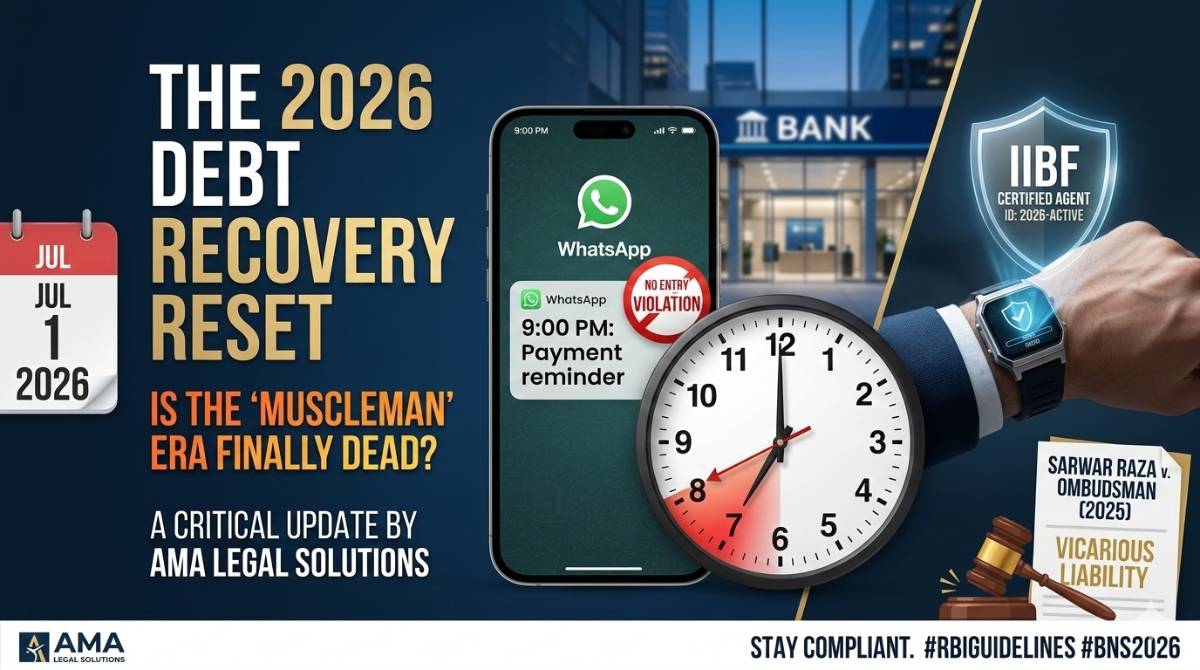
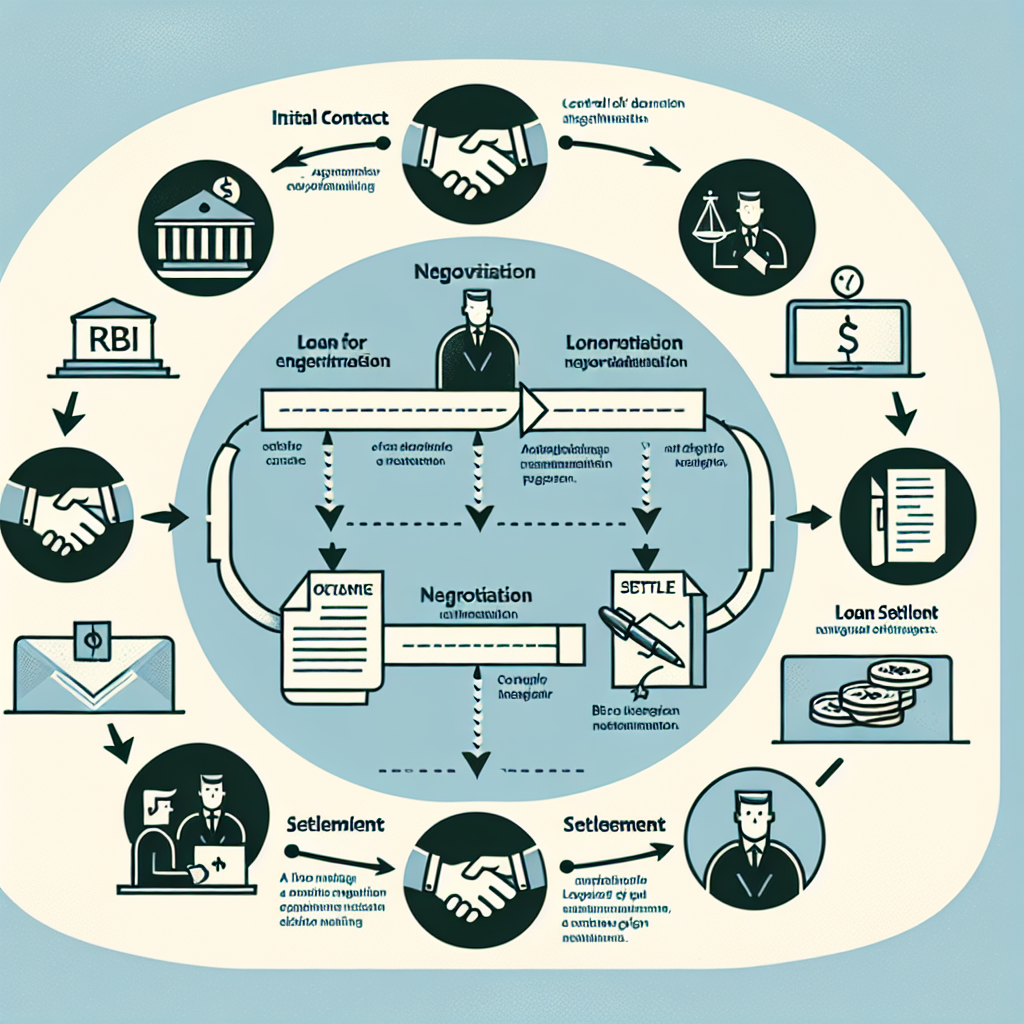
Loan settlement is a critical process for individuals and businesses struggling with debt. At AMA Legal Solutions, we believe in legally sound and strategic debt resolution to protect borrowers' rights while ensuring compliance with financial regulations. In this article, we explain the legalities of loan settlement, its benefits, potential risks, and why legal guidance is essential.
What is Loan Settlement?
Loan settlement is a negotiated agreement between a borrower and a lender where the outstanding loan amount is settled for a lesser sum. This usually happens when a borrower faces financial hardship and is unable to repay the full loan. While settlement can provide relief, it also impacts the borrower's credit score and financial credibility.
Legal Framework for Loan Settlement in India
In India, loan settlement is governed by various financial and legal frameworks, including:
RBI Guidelines on Loan Settlement: The Reserve Bank of India (RBI) provides directives on One-Time Settlement (OTS) schemes, ensuring fair practices.
SARFAESI Act, 2002: This law allows banks to recover non-performing assets (NPAs) without court intervention but also provides safeguards for borrowers.
Insolvency and Bankruptcy Code (IBC), 2016: For businesses, the IBC provides structured debt resolution mechanisms.
Consumer Protection Act, 2019: Protects borrowers from unfair recovery practices and harassment by lenders.
Our Stance on Loan Settlement
At AMA Legal Solutions, we strongly advocate for ethical and legally compliant loan settlement practices. Our approach includes:
Legal Assessment: Evaluating your financial situation and determining the best course of action.
Negotiation Support: Engaging with banks and financial institutions on your behalf for a fair settlement.
Protection from Harassment: Taking legal action against unlawful recovery practices.
Credit Score Impact Mitigation: Advising clients on post-settlement credit rebuilding strategies.
Compliance Assurance: Ensuring all agreements are documented legally to prevent future disputes.
Risks and Challenges of Loan Settlement
While loan settlement may seem like an easy way out, it comes with risks, including:
Credit Score Damage: Settled loans reflect as ‘settled’ rather than ‘closed’ in credit reports, affecting future borrowing capacity.
Legal Consequences: If settlement terms are not properly documented, lenders may pursue further claims.
Tax Implications: Forgiven debt amounts may be considered taxable income in some cases.
Alternative Legal Solutions to Loan Settlement
Instead of settlement, borrowers can explore:
Debt Restructuring: Modifying loan terms for easier repayment.
Insolvency Protection: For businesses, structured insolvency resolutions under the IBC.
Legal Recourse Against Harassment: Filing complaints against unlawful debt recovery practices.
Why Choose AMA Legal Solutions?
With our deep expertise in financial and banking laws, we offer:
✔ Expert legal consultation tailored to your financial situation.
✔ Negotiation services to achieve the best possible settlement terms.
✔ Protection from harassment and unethical recovery tactics.
✔ A legally sound approach to debt resolution and credit rebuilding.
Conclusion
Loan settlement can be a viable option, but it must be approached cautiously with legal guidance. At AMA Legal Solutions, we ensure that our clients resolve their debts while safeguarding their legal and financial interests.
For expert legal assistance in loan settlement, contact us at www.amalegalsolutions.com.